
Did you know that there are three main types of mushrooms? Saprophytic (the kind most commonly grown), parasitic, and mycorrhizal. Saprophytic mushrooms eat dead and decomposing matter, parasitic mushrooms feed on (and kill)l living trees, and mycorrhizal mushrooms live in a symbiotic (mutually beneficial) relationship with living trees.
In the Garden:
Mushroom cultivation methods vary based on which mushrooms you want to grow and what the infrastructure you have access to. The most common at home cultivation methods are: oak logs, 5-gallon buckets, or pre-inoculated bags.
For the log method, oak logs are thoroughly soaked and holes are drilled along its length. Each hole is then filled with dowels inoculated with mushroom spores. Logs must be kept moist for at least a year before mushrooms will emerge. This method is often used for maitake and shiitake mushrooms.
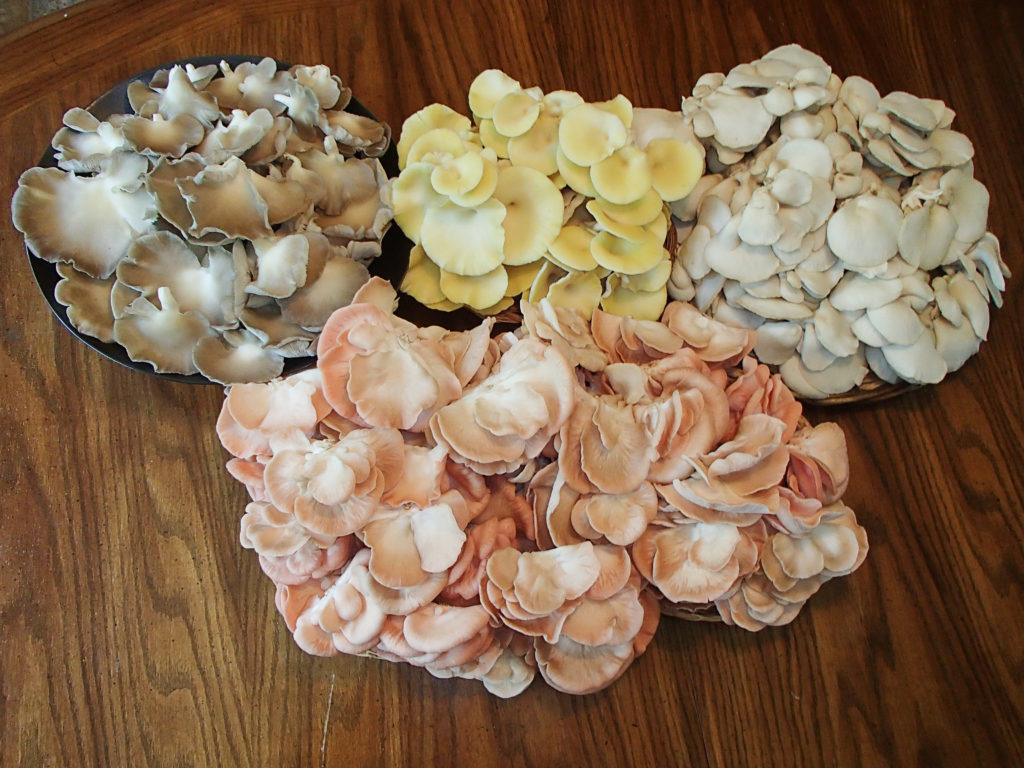
For the bucket method, ½” to 1″ holes are drilled all around the circumference of a typical 5 gallon bucket. The bucket is then packed tightly with pasteurized straw that has been mixed with grain spawn. After a two week incubation period, you keep the bucket humid moist. This method is recommended for oyster mushrooms.
For easier growing, some companies also supply pre-inncoluated mushroom bags for a wide variety of different mushrooms.
Looking to grow your own? Check out the resources and materials here and here.
In your Medicine Cabinet:
Many people assume mushrooms aren’t as nutritionally dense as other vegetables due to their dull colors. However, this is far from the truth! Mushrooms are a good source of B vitamins (energy production) and antioxidants that have been linked to being protective against cancer.
In the Kitchen:
If you don’t eat your fresh mushrooms right away, store them in the fridge inside a loosely closed brown paper bag.
To enjoy the full range of flavor from cultivated mushrooms, our friends at The Mushroom Factory share these tips to a dry saute:
- Heat a skillet on medium-high, then add mushrooms—no butter or oil yet!
- Let the mushrooms release their moisture. They’ll start to stick to the pan—don’t be scared. Don’t stir! Let them brown and crisp, THEN add your butter or oil.
- Add 1-2 tablespoons of vinegar, wine, or lemon juice to deglaze the plan. Cook until the liquid is gone. Add salt and pepper to taste. Eat and enjoy!
Looking for some additional recipes featuring mushrooms? Check out these fan favorites:
Where to Find Locally Grown Mushrooms
U.P.
Metsa Hill Farm (Atlantic Mine)
Partridge Creek Farm Inc.(Ishpeming)
Superior Mycology Co. (Houghton)
Tonella Farms (Skandia)
SE
Tantre Farm (Chelsea)
The Mushroom Factory (Detroit)
Mid
Agape Organic Farm (Mason)
Titus Farms (Leslie)
NW
Forest Garden Organic Farm (Maple City)
Undertoe Farm (Kewadin)
Ziibimijwang Farm, Inc (Carp Lake)
NE
Kammer-Pallus Farm (Onaway)
Wandering Winds Farm (Spruce)
West
Mycophile’s Garden (Grand Rapids)
Find even more mushroom producers by clicking here!
Photo Credit: Tonella Farms