How do you like to grow, cook and consume dark leafy greens?
In the garden:
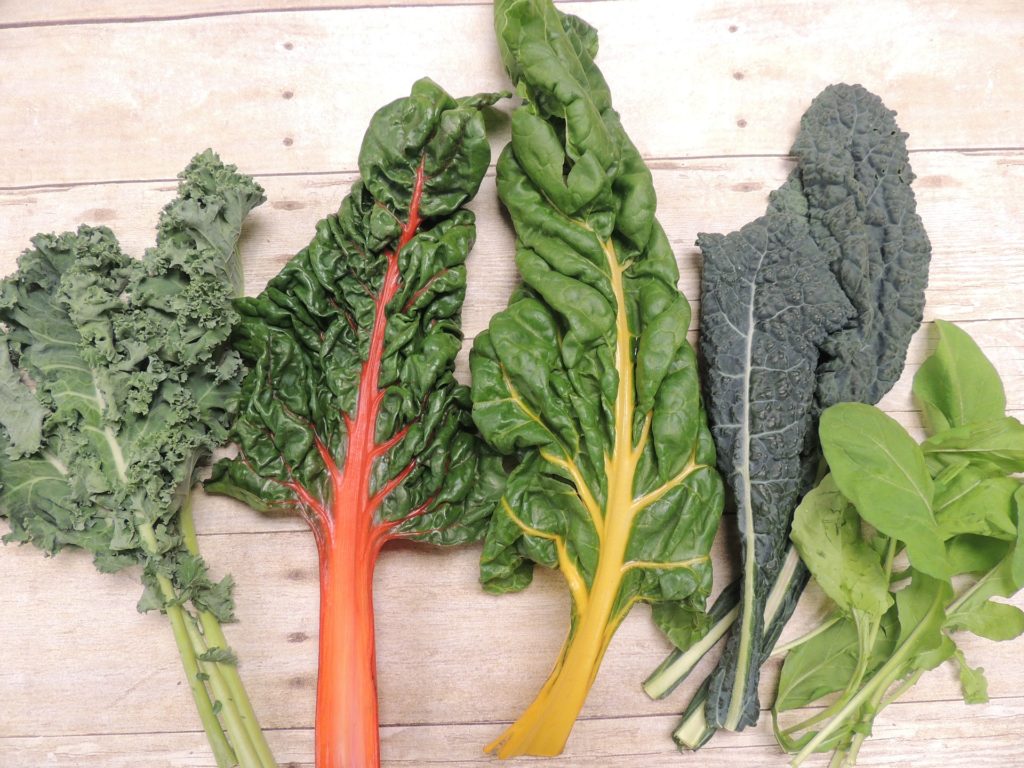
Collards, kale, and swiss chard are fairly cold tolerant which makes them perfect “shoulder season” crops. They do well planted in early spring and can continue to be planted until three months before the first frost (in Southeast Michigan, our first frost is about mid October). They are also well suited for planting in hoophouses (high tunnels) over the winter. Frost kissed kale and collards are sweet and make for a delicious winter or early spring vegetable.
To harvest collards, kale, and swiss chard in your own garden, start on the outside of the plant with the largest leaves. Snap off 2-3 leaves per plant at the base of the leaf where it attaches to the stem.
In the kitchen:
Dark leafy greens are some of the most versatlie vegetables. Tender baby greens make great salads, fabulous additions to smoothies, and interesting toppings for tacos, burgers, and sandwiches. Larger leaves can be eaten raw in “massaged” salads, shredded into slaws, or as wraps for sandwhich filling. Cooking larger leaves in stir fries, as a stand alone dish, wilted in salads, or mixed into eggs adds flavor and nutrition in many meals.
Curried Chickpea Collard Wraps (Check out this video!)
Ingredients:
1 ripe avocado
2 15-ounce cans (1 1/2 cups) chickpeas, drained and rinsed
1 medium stalk celery, diced
1/2 large bell pepper, diced
1 medium carrot, grated
1 lemon, juiced
1/4 cup cilantro, finely chopped
1/2 teaspoon salt, plus more to taste
1/4 teaspoon pepper, plus more to taste
2 Tb curry powder
8 collard leaves (may substitute kale or swiss chard)
Directions:
- Mash avocado and chickpeas together with a fork. Once the consistency of egg salad, add remaining ingredients (except collards) and stir well to combine.
- Prepare collard greens by trimming the center rib of the stem to be flush with the rest of the leaf. Make leaves more flexible (if desired), by placing them in a large saucepan of boiling water for 30 seconds. Immediately transfer to an ice bath.
- Assemble the wraps. Add 1/4 c of the chickpea mixture to the center of the collards leaves and roll up like a burrito. To help keep leaves tucked up, pierce with a toothpick.
- Enjoy!
In the Medicine Cabinet:
As far a nutrition goes, dark leafy greens are a powerhouse. They contain a host of vitamins and minerals and are a great source of fiber. Key nutrients found in dark leafy greens are:
- Vitamin A (Carotenoids): antioxidant, supports immune health, night vision, and red blood cell production. Carotenoids are yellow/organe pigments. Usually masked by the chlorophyll in leafy greens, they’re visable in the yellowing leaves of aging old produce. ½ cup provides about 50% of the recommended intake
- Vitamin C: antioxidant, supports collagen/tissue integrity (goodbye scurvy and bleeding gums), improves iron absorption, and supports immune health. ½ cup provides 15% of the recommended daily intake
- Vitamin E: antioxidant and supports immune health. ½ cup provides 23% of your recommended intake
- Vitamin K: blood clotting, bone health, and improved Vitamin D absorption. 1 cup provides anywhere from 50% (1 c. lettuce) to 450% (1 c. raw kale) of your recommended daily intake
- B vitamins: energy/metabolism, detoxification, and DNA repair. Folate (a B vitamin found in leafy greens) also promotes heart health and helps prevent certain birth defects.
Dark leafy greens are also a wonderful source of fiber, iron, magnesium, potassium and calcium.
Share your favorite recipes and growing tips with us at [email protected] or by tagging us @tastethelocaldifference or #tastethelocaldifference.
Kelly Wilson, RDN, is a Registered Dietitian Nutritionist and the Director of Community Partners for Taste the Local Difference. Her favorite dark leafy green is collard greens. Share your favorite leafy greens recipes with her at [email protected]